Industrial Vacancy Is Near 6.5%: How a Small Business Should Lease Warehouse or Flex Space
Industrial leasing hit its strongest quarter since 2022 in Q3 2026, with vacancy at 6.4% to 6.8% depending on the broker. Here is what that means for a small tenant, in numbers.
- Words
- Omar Saleh
- Filed
- Read
- 7 min
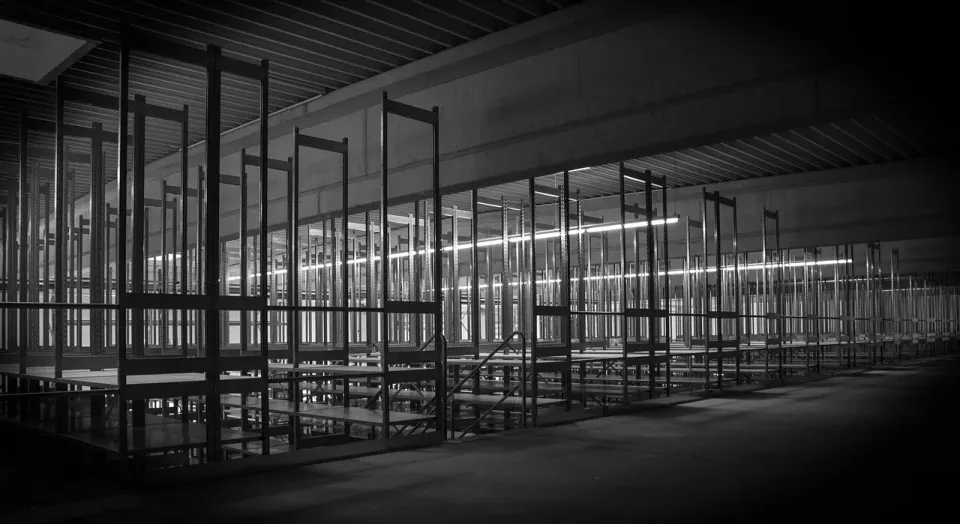
A small business leasing warehouse or flex space in late 2026 faces tighter conditions than a year ago, but not a crisis. National industrial vacancy sits between 6.4 and 6.8 percent, and asking rents are up about 3 percent. Start early, ask for a 12-month window, and negotiate term, expansion rights and operating costs, not just rent.
Two brokerage reports published in the third week of October describe the same quarter. CBRE's Q3 2026 industrial report shows net absorption of 104.6 million square feet, the highest since Q4 2022, and vacancy down 20 basis points year over year to 6.4 percent. JLL, as summarized by WRE News, counted 202.6 million square feet leased, up 38.5 percent, with national vacancy at 6.8 percent.
This guide is for owners of small distribution, light manufacturing, trade and e-commerce businesses who need 2,000 to 20,000 square feet. It explains why the headline numbers are driven by large buildings, what that means for you, and which lease terms deserve your time. New Club Cocoon covers commercial property and leasing, and this column uses worked numbers because adjectives do not pay rent.
What Do the Q3 2026 Industrial Numbers Say?

The two reports agree on direction and differ on size. CBRE reports Q3 leasing up 27.1 percent year over year to 276.8 million square feet, vacancy at 6.4 percent and availability at 8.9 percent. Average net asking rent rose 3.6 percent to $11.16 per square foot. JLL reports 202.6 million square feet leased, national vacancy of 6.8 percent and average asking rent of $10.55, up 3.2 percent.
Why the gap? Each firm tracks a different set of buildings and defines leasing, absorption and vacancy its own way. JLL itself notes that it counts absorption separately from gross leasing, and that another brokerage's absorption figure is not directly comparable. Do not mix numbers from different reports. Pick one source for your market and compare like with like.
Both reports note rising supply. CBRE shows 278 million square feet under construction, up 9.3 percent. JLL reports 317 million square feet, up 28.7 percent. New deliveries should give tenants more choice later, but they arrive mostly in large formats in a few markets.
Why Do the National Numbers Matter Less for a Small Tenant?
They are weighted toward big buildings and big leases. CBRE says leases of 700,000 square feet or more nearly doubled, while smaller size ranges rose by an average of 9.7 percent. JLL says Class A warehouses over 1 million square feet fell to 5.4 percent vacancy from 9.5 percent a year earlier, while older and smaller properties improved less.
That split is useful for you. Your market is probably not the 1-million-square-foot market. In many places, older and smaller buildings still have availability, which can mean room to negotiate. CBRE also notes that older-building move-outs continue in markets with a lot of first-generation space, and that higher renewal incentives are supporting existing facilities.
Demand mix matters as well. JLL ties the surge to data-center supply chains, advanced manufacturing and defense-related expansion. Third-party logistics made up 17.9 percent of Q3 leasing and construction materials and building fixtures 14.7 percent. Those users compete for the same trade-oriented buildings you may want, so in markets near large projects, small tenants can feel pressure.
What Does a Small Industrial Lease Really Cost?
Asking rents are usually quoted triple net, so the rent is only part of the bill. Triple net means the tenant also pays a share of property taxes, insurance and common-area maintenance. Budget the base rent plus those charges plus utilities. Use the averages as a rough check only, because small units in many markets cost more per square foot than the national figure.
Here is a worked example for illustration only. Take 6,000 square feet at $11 per square foot triple net. The base rent is $66,000 a year, or $5,500 a month. If operating costs run $3 per square foot, add $18,000 a year, or $1,500 a month. Your occupancy cost is $7,000 a month before utilities, and your all-in rate is $14 per square foot.
| Item | Per sq ft per year | Annual (6,000 sq ft) | Monthly |
|---|---|---|---|
| Base rent | $11.00 | $66,000 | $5,500 |
| Operating costs (taxes, insurance, CAM) | $3.00 | $18,000 | $1,500 |
| Total before utilities | $14.00 | $84,000 | $7,000 |
Ask the landlord for the last three years of operating cost history for the building. A building with a recent tax reassessment or a sale can see its taxes jump. That is where small tenants get surprised.
Which Lease Terms Should a Small Tenant Negotiate First?

Negotiate the terms that protect growth and cost, in this order: term and renewal, expansion rights, operating cost caps, annual rent steps and the allowance. Rent per foot is only one line. A good deal on rent can lose to a bad deal on the rest.
Use this list as a starting point.
- Term and renewal: a three- to five-year term with one renewal option at a stated rent or a fair-market formula.
- Expansion rights: a right of first offer on adjacent space, so growth does not force a move.
- Operating cost caps: a cap on controllable costs, and a clause that excludes capital items.
- Rent steps: annual increases fixed in dollars or percent, not tied to an open-ended index.
- Allowance and delivery condition: a tenant improvement allowance or free rent, plus a list of what the landlord must deliver working, such as roof, loading doors and lighting.
- Use and signage: language that allows your actual use, hours and deliveries.
Keep your leverage in mind. Where a market has older or smaller space available, ask for more free rent or a bigger allowance. In a tight submarket, push on structure rather than price, because landlords often hold firm on rent but bend on term and rights. Our piece on leasing retail space in a tight market makes the same point for stores.
How Do Brokers, Timing and Fit-Out Fit Into the Deal?
Start the search 9 to 12 months before a lease ends, because industrial deals include site visits, a letter of intent, lease drafting and often a build-out. A tenant rep can help in a market you do not know. In many deals the landlord's commission pays the tenant's broker, but confirm that in writing before you start.
Plan the build-out cost before you pick a space. Warehouse and flex tenants often add offices, racking, power and dock equipment. Construction input prices rose 11.2 percent year over year in September, so get quotes early and read the terms. Our guide on budgeting an office fit-out in 2026 helps with the office portion.
Tax matters, too. Some interior improvements can be depreciated or deducted, and our walkthrough on deducting fit-out costs explains the main routes. If you are weighing a purchase instead, the U.S. Small Business Administration describes its 504 loan program for buying owner-occupied real estate.
Is a Sublease or Short-Term Flex Deal Worth Considering?
Sometimes, especially if your growth is uncertain. A sublease takes over the remaining term of another tenant's lease, often at a lower rate and with the improvements already in place. A short-term or flex agreement trades a higher rate for freedom to leave.
The trade-off is risk and control. In a sublease, you depend on the original tenant's lease and on the landlord's consent, and the term may be too short to justify moving. A short-term deal costs more per foot, but it can bridge a gap while you wait for a better building to come available.
Ask for any sublease to include a clean path to a direct lease with the landlord when the term ends. Without it, you may be back on the market in two years with a business that has outgrown the space.
What Should You Do in the Next 30 Days?

Write down your needs, then check your market. Define your square footage range, your growth over three years, your dock and power needs, and your budget for all-in occupancy cost, not base rent. Then pull your local brokerage's latest industrial report and compare its vacancy and asking rent with the national figures.
Next, tour at least three buildings of different ages. Ask each landlord for operating cost history, the delivery condition and the incentives available. Send a short letter of intent to your top choice, and ask a second landlord to compete.
At New Club Cocoon, we suggest tracking every quote in one table with base rent, operating costs, free rent, allowance and term, so you compare total cost over the term, not just the headline rate.
Conclusion
Industrial leasing is stronger in Q3 2026 than at any point since 2022, but the strength sits mostly in large, new buildings. For a small tenant, the useful move is to start early, price the all-in cost and negotiate term, expansion and operating cost protections before rent.
Your next step is to find your local broker report this week and compare it with the national numbers above. Then build your quote table before you call a landlord.
What is the industrial vacancy rate in the U.S. right now?
What does triple net mean in an industrial lease?
Are small tenants affected by the industrial leasing boom?
How early should I start looking for warehouse space?
Keep reading
All stories ↗ Retail Vacancy Falls to 4.3%: How a Small Retailer Should Lease in a Tight Market Colliers says national retail vacancy sits near record lows, yet small-shop demand is uneven. Here is how a small retailer or restaurant should shop for space, read the lease and avoid overpaying. By Omar Saleh — 7 min
 Office Vacancy Falls to 18.2%: How a Small Business Should Negotiate a Lease Now CBRE's Q3 2026 data shows prime space tightening while overall vacancy stays high. Here is where a small tenant still has leverage, and where it does not. By Omar Saleh — 7 min
 Tenant rep broker fees: who pays and how much The landlord usually writes the check, but the commission is built into your rent. Here is how it is calculated and what to put in writing. By Omar Saleh — 7 min
 Next in the index — 03 / 25 Fit-out — 8 min
Building Performance Standards in 2026 and 2027: What Commercial Tenants Should Check in a Lease and Fit-Out
The Monday memo · free
Subscribe for the Monday memo
One long read, three clauses worth knowing and a note on the market, every Monday morning.
( Tap to say yes )