Flex Office vs. a Traditional Lease in Late 2026: What 10 Desks Really Cost a Small Business
Flex is now 3.1% of U.S. office stock and private desks average about $687 a month for small teams. Here is how the math compares with a lease.
- Words
- Omar Saleh
- Filed
- Read
- 8 min
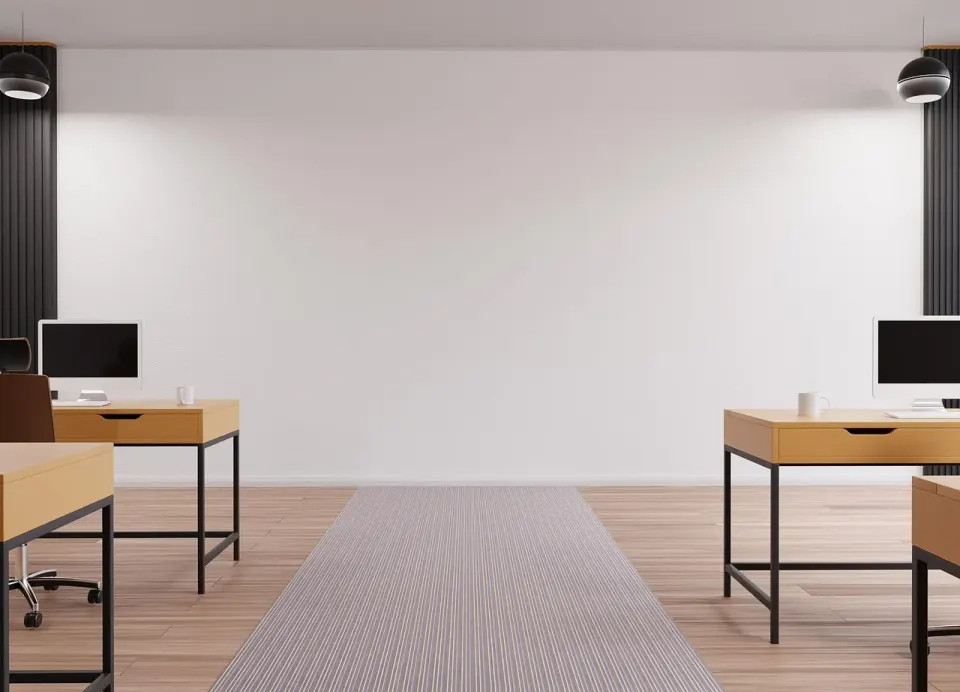
For a 10-person team, private flex office desks average about $687 each per month nationally, or roughly $82,400 a year, according to Hubble's Q3 2026 data. A 1,500-square-foot traditional lease at the $33.18 national asking rent costs about $49,800 in base rent plus operating costs and setup. Flex costs more per year, but it avoids a long commitment.
This guide is for business owners with 5 to 30 staff who are deciding between a flex office and a conventional lease. It uses October 2026 market data to price both options for a 10-person team, shows where the numbers cross, and lists the questions that should decide it. New Club Cocoon covers commercial space for tenants, and the cheapest option on paper is not always the cheapest in practice.
What the October 2026 flex data shows
Cushman & Wakefield's Global Trends in Flexible Office 2026 report, dated October 13, says flex made up 3.1% of total U.S. office inventory in the second quarter, up from 2.6% a year earlier and 2.3% in 2024. National flex inventory rose 18% over the year.
Suburban flex locations grew 39% from 2024 to 2026, against 22% for urban locations, according to the same report. It links the growth to a thin construction pipeline, which fell to just under 32 million square feet in the Americas, and to owners using flex to activate underused space.
Hubble's Q3 2026 national office report adds prices. Coworking inventory reached 168.4 million square feet, or 2.5% of U.S. office stock, and national office vacancy held at 17.8%. The average asking rent for traditional space was $33.18 per square foot per year, down 1.5% from the second quarter.
The takeaway for a tenant is that there are more flex options in more suburbs than there were two years ago, and traditional space is still plentiful. Both are real choices now.
How much does a private flex office cost per desk?
The national average for a private office is $651 per desk per month, based on Hubble's Q3 2026 data. Small teams pay a bit more: $688 per desk for 1 to 5 desks, $687 for 6 to 10, $638 for 11 to 20 and $597 for more than 20. Prices vary widely by city.
Hubble's city figures run from $414 in Philadelphia and $434 in Houston to $740 in Austin and $891 in Manhattan. Chicago averages $449 and Dallas-Fort Worth $519. If you are outside a major market, ask for local quotes, since these averages are drawn from the largest metros.
A flex price usually bundles rent, utilities, internet, cleaning, furniture and shared spaces such as meeting rooms and a kitchen. That bundle is what makes comparison with a traditional lease tricky, because the lease price leaves most of those items out.
What a traditional lease really costs for 10 people
Start with the base rent. Assume 150 square feet per person, which is 1,500 square feet for 10 people. At the national asking rent of $33.18 per square foot, base rent is about $49,770 a year, or $4,148 a month. That is an assumption for illustration, and your space needs may differ.
Then add the costs the asking rent does not cover. Operating expenses, utilities, cleaning, internet and insurance often add 20% to 35% to the base figure, depending on the lease type. At 25%, that is about $12,440 a year. Furniture and IT setup, at $15,000 spread over a five-year term, adds $3,000 a year.
Fit-out can add more. Our guide to the office fit-out budget in 2026 shows what build-outs cost per square foot, and our post on protecting a tenant build-out budget explains how to hold that number as costs rise. A landlord allowance can offset some of it.
The table below puts the two options side by side for the same 10-person team. These are illustrations built on market averages, not quotes.
| Item | Flex (10 private desks) | Traditional (1,500 sq ft) |
|---|---|---|
| Base cost per year | $82,440 (at $687 a desk a month) | $49,770 (at $33.18 a sq ft) |
| Operating costs and utilities | Included | About $12,440 (25%) |
| Furniture and IT, per year | Included | About $3,000 ($15,000 over five years) |
| Annual total | About $82,440 | About $65,210 |
| Typical commitment | Month to 12 months | 3 to 5 years or more |
The traditional lease is about $17,200 a year cheaper, or 21% less than the flex total. Put another way, flex costs about 26% more. That is the price of flexibility.
What does the flex premium buy you?

It buys the option to change your mind. A five-year lease on 1,500 square feet commits you to about $248,850 in base rent alone, before operating costs. If your team shrinks to six or grows to 18, you must sublease, negotiate an early exit or live with the mismatch.
Flex lets you add or drop desks on short notice, move in within days and skip the build-out. For a startup, a company testing a new city or a team with uncertain headcount, a $17,000 premium can be cheaper than one bad lease.
It also reduces upfront cash. A traditional lease normally requires a security deposit, often one to three months of rent, plus furniture, cabling and signage. Flex deposits are usually smaller. If cash is tight, that matters as much as the annual total.
When a traditional lease wins
A traditional lease wins when headcount is stable, you need control of the space, and you plan to stay at least three years. It also wins when you need a branded space for clients, special equipment or a layout that a flex center cannot offer.
Control matters. In your own space you choose the layout, signage, security and hours. You also build equity in the sense that a good fit-out and a relationship with a landlord can pay off at renewal. The savings grow as the team grows, because the flex price rises roughly in line with desks while a lease price per person falls with better space use.
Market conditions help tenants too. National office vacancy sits at 17.8%, so landlords compete for tenants. Our guide to negotiating a small business lease at 18% vacancy explains what to ask for, including free rent and improvement allowances that can narrow the gap further.
A five-question test to choose between them
Use these five questions. Answer each with a yes or a no, and write down the reason.
- Will your headcount stay within 20% of today's number for at least three years?
- Do you need a branded space, special equipment or a custom layout?
- Can you afford a deposit, a build-out and furniture up front?
- Does a suitable space exist within your commute radius at the average asking rent?
- Is a landlord willing to offer free rent or an allowance for a longer term?
Four or five yes answers point to a traditional lease. Two or fewer point to flex. Three is a toss-up, and a hybrid may fit: a small traditional lease for core staff plus flex desks or a meeting room for peaks.
Zoning and location also matter. The U.S. Small Business Administration notes on its page on picking a business location that location determines which taxes, zoning rules and regulations apply, and that costs such as rental rates, insurance and utilities vary a lot by place. Check zoning before you sign either option.
Questions to ask a flex provider
Read the membership agreement as carefully as a lease. Ask about the term, the notice period to reduce desks, how price increases work, and what happens to your deposit. Ask whether the price is per desk or per room, since a room-based price can trap you at a minimum size.
Ask what is included. Internet, printing, meeting-room credits, parking and access hours are common add-ons that can raise the monthly bill. Ask about the provider's financial health too, because a closing center can disrupt your business overnight.
Ask whether you can brand your suite and whether you can host clients. A private suite with your name on the door is different from a shared floor. Finally, ask how the center handles noise and data security if you handle sensitive client information.
How a broker can help, and when you can skip one
A tenant representative can compare flex and traditional options, request proposals from several providers and negotiate terms. In most traditional deals the landlord's listing agreement pays the broker's commission, so the cost to you is often indirect. Flex deals vary, and some providers pay referral fees.
You can skip a broker if you only need a few desks and the terms are standard. Use a broker when you need more than 5,000 square feet, plan to commit for years or need help with a hybrid structure. Ask any broker how they are paid and whether they receive money from the provider they recommend.
Whichever route you choose, get everything in writing: the price, term, notice, deposit, included services and exit rights. A clear agreement now is worth far more than a discount you cannot document later.
Conclusion
For a 10-person team at national averages, flex costs about 26% more per year than a traditional lease, and it buys short commitments and no build-out. A traditional lease costs less per year but needs more cash up front and a longer promise. Headcount certainty and cash on hand are the best guides.
Your next step is to get two quotes of each type for your city and run the same table with your own numbers. New Club Cocoon will keep following the office and retail leasing market so you can compare the options with current data.
How much does a private flex office cost per desk in 2026?
Is flex office cheaper than a traditional lease?
How fast is flex office growing in the United States?
When should a small business choose a traditional lease over flex?
Keep reading
All stories ↗ Office Vacancy Falls to 18.2%: How a Small Business Should Negotiate a Lease Now CBRE's Q3 2026 data shows prime space tightening while overall vacancy stays high. Here is where a small tenant still has leverage, and where it does not. By Omar Saleh — 7 min
 The office that shrank and got busier A firm gave up a third of its floor, spent the savings on the rooms people actually used, and found its office fuller than before. By Ruth Anand — 4 min
 Who still signs flex-space deals Flexible offices cost more per desk than a conventional lease, and for a surprising range of tenants that premium is exactly the point. By Ruth Anand — 5 min
 Next in the index — 04 / 28 Fit-out — 7 min
How to Protect a Tenant Build-Out Budget as Construction Input Prices Rise 11.2%


The Monday memo · free
Subscribe for the Monday memo
One long read, three clauses worth knowing and a note on the market, every Monday morning.
( Tap to say yes )