Operating Expense Pass-Throughs in 2026: How to Cap CAM Charges in a Commercial Lease
A noncumulative cap, a short exclusion list and real audit rights are the three clauses that keep CAM and other pass-throughs from drifting upward.
- Words
- Maya Ferrante
- Filed
- Read
- 7 min

Operating expense pass-throughs are the building costs a landlord bills tenants on top of base rent, including common area maintenance (CAM), property taxes and insurance. In 2026, rising repair and energy prices make them the line item most likely to surprise a small tenant. Negotiate the definition, a cap, a list of exclusions and audit rights before you sign.
This guide explains how operating expense pass-throughs work in a net lease and where the money leaks out. It is written for business owners and office managers who are about to sign or renew a lease with a CAM clause. New Club Cocoon covers commercial leasing from the tenant's side of the table, so every section ends with something you can ask for.
What Operating Expense Pass-Throughs Include in a Commercial Lease

A pass-through is any cost of owning and running the building that the lease lets the landlord recover from tenants. In a triple net lease, that means you pay base rent plus your pro-rata share of taxes, insurance and CAM. Your share is usually your square footage divided by the building's rentable square footage.
CAM covers the shared parts of the property. Think parking lot sweeping, landscaping, lobby cleaning, elevator service and common-area lighting. Property managers bill these as monthly estimates, then reconcile them against actual costs after year end.
Consider a 2,000 square foot unit with estimated pass-throughs of $12 per square foot. That is $24,000 a year, or $2,000 a month, on top of base rent. If the reconciliation lands 8 percent above the estimate, you owe a $1,920 true-up in one lump sum.
Not every cost is treated the same way. As Wikipedia's overview of common area maintenance charges explains, taxes, security, utilities and snow removal are generally called uncontrollable, and the rest are controllable. That split matters because caps usually apply only to the controllable group.
The lease type also changes the math. A gross or full-service lease folds most of these costs into one rent number, which is why our comparison of flex office against a traditional lease looks so different once a net lease adds its own charges.
Why Operating Expense Pass-Throughs Are Climbing in 2026

Landlords pass through what they pay, and what they pay is rising. The Bureau of Labor Statistics (BLS) Producer Price Index release for October 2026 shows final demand prices up 6.5 percent over the 12 months ended in October. It was the largest 12-month rise since November 2022.
The same release tracks maintenance and repair work on nonresidential buildings. That index rose 4.8 percent over the 12 months. Every roof patch, parking lot repaint and HVAC service call a landlord books flows toward your reconciliation statement.
Energy is the other swing factor. The BLS Consumer Price Index (CPI) release for October 2026 reports that the energy index rose 0.7 percent in October after a 5.2 percent jump in September. Common-area electricity and gas are uncontrollable costs, so a cap on CAM will not shield you from them.
One line moved the other way. The PPI shows nonresidential property management fees fell 5.9 percent in October. If your lease sets the management fee as a percentage of costs or rent, check that the percentage actually reflects what the manager charges the owner.
How Do You Cap CAM Charges in a Commercial Lease?
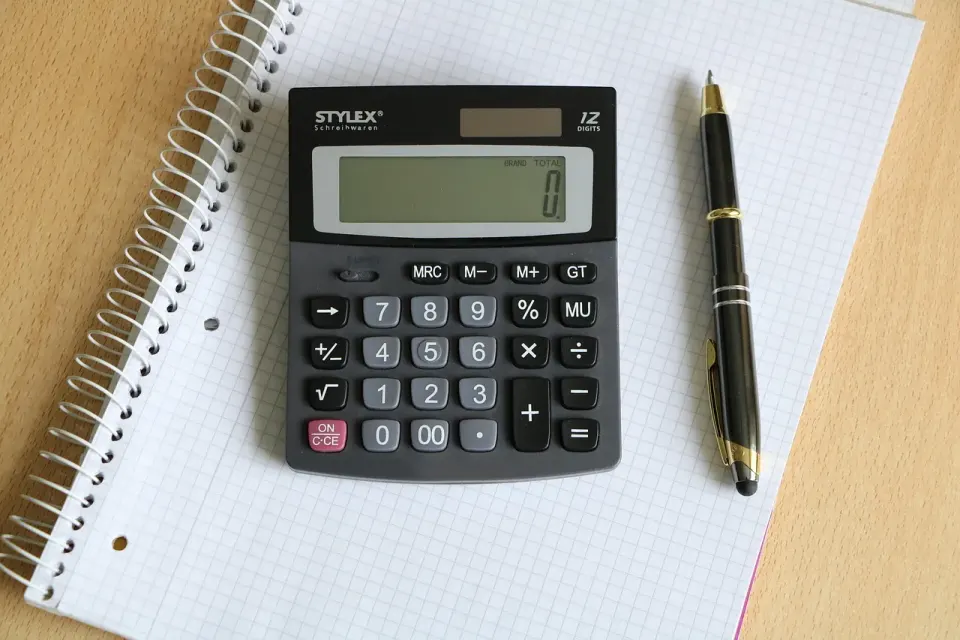
Ask for a written cap on annual increases in controllable operating expenses, stated as a percentage and made noncumulative. A noncumulative cap limits each year's charge to a set percentage over the prior year's charge. The landlord cannot bank unused room and spend it later.
Here is a worked example. Say you lease 2,000 square feet and your controllable CAM is $6.00 per square foot, or $12,000 a year. Costs stay flat in year two, then jump 8 percent in year three to $12,960.
| Cap type | Year 3 maximum | What you pay |
|---|---|---|
| No cap | No limit | $12,960 or more |
| 4% cumulative cap | $12,979 (12,000 x 1.04 x 1.04) | $12,960 |
| 4% noncumulative cap | $12,480 (12,000 x 1.04) | $12,480 |
The noncumulative cap saves $480 in that single year. Over a ten-year term with a few lumpy years, the gap grows. The cumulative version looks like protection, yet it lets the landlord catch up on years when costs sat still.
Pair the cap with a fixed base rent schedule. Our breakdown of rent escalation clauses, fixed 3 percent bumps against CPI, shows how base rent and pass-throughs stack. A tenant who negotiates one and ignores the other has only done half the job.
Taxes and Insurance: The Costs a Cap Rarely Covers
Most landlords insist that property taxes and insurance sit outside any cap. They argue that the owner cannot control what the assessor or the insurer decides. That is fair on its face, but you can still ask for protections.
For taxes, ask the landlord to appeal an assessment that looks too high and to credit you with your share of any refund. Ask to see the tax bill itself, not a summary. If the building is sold, ask that the lease bar a reassessment increase from flowing to you in the first years after closing.
For insurance, ask that the policy be commercially reasonable for the building type and that the landlord shop it when it renews. A premium that doubles in one year deserves a question about coverage limits and deductibles. You are paying your share of that policy, so you are entitled to know what it covers.
What Should a Tenant Exclude From Operating Expenses?
Exclusions are where a good lease earns its keep. The clause should list what the landlord cannot bill, because anything not named tends to be billable. Start with these items and ask your lawyer or tenant rep to add more.
- Capital expenditures, such as a new roof, replaced chiller or repaved lot, unless amortized over their useful life.
- Leasing commissions, marketing costs and legal fees for negotiating with other tenants.
- Costs the landlord recovers from insurance, warranties or another tenant.
- Fines and penalties caused by the landlord's own violations.
- Reserves, depreciation and the owner's mortgage payments.
- Property tax increases triggered by a sale or refinancing of the building.
Capital work deserves special attention when a building needs accessibility upgrades. Who pays for those is a separate fight, and our guide to ADA compliance in a commercial lease covers how to keep a landlord's compliance bill out of your CAM.
Two more protections are worth asking for. A gross-up clause should be limited to variable costs, such as cleaning and utilities, and should lift them to a stated occupancy level. Without it, a half-empty building can push the per-foot rate up. And the management fee should be a stated percentage with no fee charged on the pass-through items themselves.
How to Audit a CAM Reconciliation Statement

The audit clause is only useful if you can actually use it. Ask for a right to inspect the landlord's books for the previous year, a reasonable window to dispute the statement after you receive it, and a refund with interest if the bills were overstated. Many leases also shift the audit cost to the landlord when errors exceed a threshold written into the lease.
When the statement arrives, check four things in order. Compare it with the estimates you paid. Match your pro-rata share to the lease. Look for items on your exclusion list. Then ask for the invoices behind any line that jumped more than the cap allows.
Keep a simple tracker from the first month. Record the monthly estimate, the year-end actual, your share and any credit or true-up. After two cycles, you can spot a pattern, such as one line that always runs over. That pattern is the best evidence you will have when you negotiate a renewal.
Retail tenants face the biggest swings because shared costs are larger in centers and strips. If that is you, our piece on leasing in a tight retail market with 4.3 percent vacancy explains how little leverage you have when space is scarce. That is exactly why you should settle the CAM definition before the landlord has other offers.
The Small Business Administration (SBA) makes a modest but useful point in its guidance on leasing business assets and space. Every lease can be structured differently, so read the details of your own offer. At New Club Cocoon, our editors read the expense clause before they read the rent.
What to Do Before You Sign
Ask the landlord for last year's reconciliation for the building, not just the estimate for your first year. Then compare the actual per-square-foot figure with the number in your proposal. A gap of more than a few percent is a negotiating point.
Next, mark up the definition, the cap, the exclusions and the audit clause in that order. Bring in a commercial real estate lawyer or a tenant rep broker for the final draft. Pass-throughs are a recurring cost, and a clause you fix now repeats its benefit every year of the term.
Fact-checked as of November 19, 2026. This article is general information, not legal advice. Have a qualified lawyer review your lease before you sign.
What are operating expense pass-throughs in a commercial lease?
What is the difference between a cumulative and a noncumulative CAM cap?
Are property taxes and insurance included in a CAM cap?
How long do I have to dispute a CAM reconciliation statement?
Keep reading
All stories ↗ Rent Escalation Clauses in 2026: Fixed 3% Bumps vs. CPI as Inflation Reaches 3.7% Inflation is back above the usual 3% bump. Here is how fixed and CPI escalators compare, and which wording protects a tenant. By Maya Ferrante — 8 min
 Tenant Improvement Allowance in 2026: What to Ask For as Free Rent Shrinks Manhattan allowances are up 7.9% in a year while free rent falls. Here is how to price both and what to lock into the lease. By Omar Saleh — 8 min
 Personal Guarantees in a Small Business Lease: What a Good Guy Guaranty Ruling Means for Tenants New York's top court held that a good guy guarantor's liability ended when the tenant vacated. Here is how to negotiate and protect yourself. By Maya Ferrante — 7 min
 Next in the index — 03 / 23 Proptech — 7 min
Office Occupancy Data in 2026: How a Small Tenant Can Right-Size Space Before Renewal


The Monday memo · free
Subscribe for the Monday memo
One long read, three clauses worth knowing and a note on the market, every Monday morning.
( Tap to say yes )