ADA compliance in a commercial lease: who actually pays
Landlord and tenant are both on the hook under federal law. The lease only decides who reimburses whom, so read that clause before the rent schedule.
- Words
- Maya Ferrante
- Filed
- Read
- 8 min
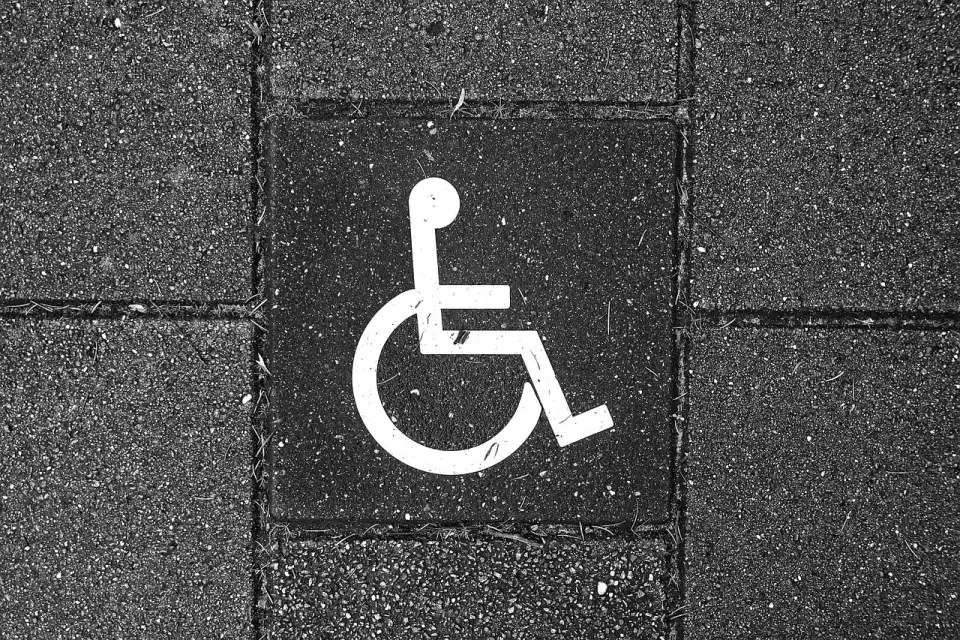
Under the Americans with Disabilities Act (ADA), both the landlord and the tenant of a shop, restaurant or office open to the public are fully responsible for accessibility. A lease can split the cost between them, but that split binds only the two parties. If a customer sues, either one can be named.
Most tenants find this out too late. The ADA compliance clause is usually a single paragraph near the back of the lease, and it rarely gets a second look during negotiation. Then a demand letter arrives about a door that is too heavy or a counter that is too high, and the clause decides who writes the check.
This guide is for small business owners signing or renewing a lease on retail, restaurant or office space that customers visit. It covers what the law actually requires, how a typical ADA compliance clause shifts the cost, which tax breaks soften the bill, and the edits worth asking for before you sign.
What does the ADA require from a commercial tenant?
A tenant that serves the public must remove physical barriers when doing so is "readily achievable," meaning easy and cheap relative to the business's size. Any new build-out or alteration must also meet the 2010 ADA Standards for Accessible Design. Bigger businesses are expected to do more.
The Department of Justice's ADA Title III overview gives a plain example of readily achievable work. A store moves the displays that block its aisles and has a clerk fetch items that sit out of reach. Neither fix needs a contractor. Ramps, wider doors and restroom rebuilds are a different matter, and that is where the money goes.
Title III covers "places of public accommodation." That includes shops, restaurants, clinics, gyms, salons and offices that clients visit. A back-office suite that only staff use is a "commercial facility" instead. It only has to meet the standards when it is built or altered.

Why both landlord and tenant carry ADA liability
The Department of Justice's position is blunt. Its Title III Technical Assistance Manual says both the landlord and the tenant "have full responsibility" for ADA compliance at a public accommodation. The rule lets them divide that responsibility in the lease. But the manual adds that the division is "only effective as between the parties."
In practice, that means a plaintiff can name the landlord, the tenant or both. Most do name both. The ADA compliance clause then becomes the scorecard for who reimburses whom once the case settles. A tenant who signed a clause taking on "all compliance with laws" can end up paying the landlord's legal fees as well as its own.
Federal law is also the floor, not the ceiling. Several states have their own accessibility statutes, and some allow damages that the federal ADA does not. California's Unruh Civil Rights Act is the best-known example. If your space is in a state like that, the clause matters even more.
How an ADA compliance clause usually shifts the cost
Most landlord-drafted leases handle accessibility in one of three ways. Each one reads as routine boilerplate, and each one sends the bill to a different place.
The table below sets out the common versions and what each tends to mean for a tenant.
| Clause wording | Who usually pays | Risk for the tenant |
|---|---|---|
| "Tenant shall comply with all laws affecting the premises" | Tenant, for everything inside and often outside the space | High |
| "Tenant shall comply with laws arising from tenant's use or alterations" | Tenant for its own work; landlord for the base building | Medium |
| "Landlord delivers premises and common areas in ADA compliance" | Landlord for existing conditions; tenant for later changes | Low |
| Silent on compliance | Unclear, so it is decided by a court or a settlement | Unpredictable |
The first version is the one to watch. "All laws" sounds harmless. In a triple-net lease it can make the tenant pay to rebuild a parking lot curb ramp it does not control. The safer middle ground ties your duty to your own use and your own alterations.
Where accessibility costs land in a typical fit-out
The biggest accessibility costs tend to sit in the same few places. Knowing them helps you decide which ones to push back to the landlord. It also tells you what to ask a contractor to price before you commit.
These are the items that most often show up in demand letters and surveys:
- The path from the parking lot or sidewalk to the front door, including curb ramps and slopes
- Entrance doors, especially their width, closing force and threshold height
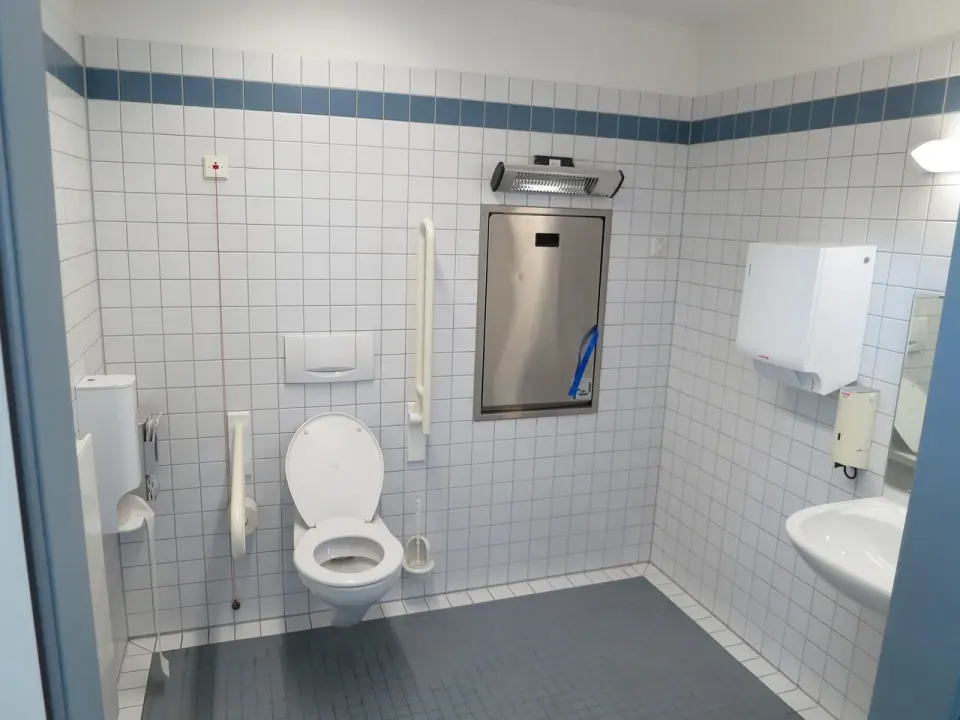
- Restrooms, which often need a full rebuild to meet turning-space rules
- Sales and service counters, which need a lower section
- Signage, including raised characters and braille at permanent rooms
The 2010 ADA Standards for Accessible Design, adopted on September 15, 2010, set the measurements for each of these. Any alteration you make today has to meet them. The first two items on that list are usually base-building elements. That is why a fair ADA compliance clause puts them on the landlord.
Restroom work is the line item that surprises tenants most. A single-user restroom that meets the turning-space and grab-bar rules can take more floor area than the old one. In an older storefront, that can mean moving a wall, re-routing plumbing and losing usable space. If you pay for that work yourself, our guide to deducting fit-out costs in 2026 explains how much of it can be written off in the first year.
Tax breaks that soften the ADA compliance bill
Two federal tax breaks help pay for accessibility work. A small business can use both in the same year, as long as it does not claim the same dollar twice. Few tenants budget for them, and they can take a real bite out of the cost.
The first is the Disabled Access Credit. According to the Internal Revenue Service (IRS) summary of disability-related tax benefits, it is open to businesses that earned $1 million or less, or had no more than 30 full-time employees, in the previous year. The credit covers half of eligible spending between $250 and $10,250. That puts the maximum at $5,000 a year.
The second is the Architectural Barrier Removal Tax Deduction. The IRS lets a business of any size deduct up to $15,000 a year for removing barriers, even on items that would normally be depreciated over many years. The credit is claimed on IRS Form 8826. The deduction is listed as a separate expense on the return.
Here is a worked example. A café with 12 staff spends $18,000 widening its entrance and rebuilding a restroom. It could claim the full $5,000 credit on the first $10,250. It could then deduct up to $15,000 of the rest as barrier removal, with no double-counting. Your accountant should run the real numbers, but the saving is large enough to change how you negotiate.
Lease edits worth asking for before you sign
At New Club Cocoon, we read the compliance clause before we read the rent schedule. The rent is negotiated in the open. The compliance clause is where costs slip through unnoticed. A few targeted edits can move most of the accessibility risk back to where it belongs. A tenant rep broker can push for them, and our explainer on tenant rep broker fees covers how that help is paid for.
These are the requests to put in your first markup, in rough order of importance:
- Ask the landlord to deliver the premises, entrance and common areas in ADA compliance on the start date.
- Narrow your duty to compliance "arising from tenant's specific use or tenant's alterations."
- Have the landlord keep responsibility for parking, sidewalks, shared restrooms and building entrances.
- Make the indemnity mutual, so each side covers claims caused by its own areas.
- Ask for a tenant improvement allowance line that can be spent on accessibility work.
Landlords will not agree to everything. A national retail landlord with a standard form may refuse the first point outright. Even so, the second and fourth points are common compromises. The U.S. Access Board's technical guides to the ADA Standards are a good place to check what a specific fix involves before you argue about who pays for it.

When to get an accessibility survey
An accessibility survey is a site inspection that lists every barrier and estimates the cost to fix it. The best time to order one is during the letter of intent stage, before the lease is signed. At that point the landlord still wants the deal, and the findings become a negotiating tool.
A survey on a small storefront often costs a few hundred to a few thousand dollars, depending on the size and the inspector. In California, a Certified Access Specialist (CASp) inspection also gives the business some legal protections. Either way, the report turns a vague clause into a priced list of items. That makes it far easier to agree who covers what.
If you are renewing rather than signing fresh, the survey still pays off. A renewal is the cheapest moment to rewrite a bad ADA compliance clause. The landlord wants to keep a paying tenant, and you have years of rent history as leverage. If the landlord will not move at all, it may be worth pricing the alternative. Our look at when an SBA 504 loan beats renting runs those numbers.
The practical answer for tenants
You cannot sign away ADA liability. You can only decide, with your landlord, who pays when a claim lands. Read the compliance clause as closely as the rent clause. Push base-building items back to the landlord, and limit your duty to your own use and alterations.
Then price the risk. Order a survey before you sign, budget for the restroom and entrance, and ask your accountant about the Disabled Access Credit and the barrier removal deduction. New Club Cocoon's view is simple: the cheapest accessibility fix is the one you negotiated before the keys changed hands.
Reviewed by New Club Cocoon's leasing desk on October 23, 2026. This article is general information, not legal or tax advice.
Can a commercial lease make the tenant solely responsible for ADA compliance?
Who usually pays for ADA upgrades to parking lots and building entrances?
How much is the Disabled Access Credit worth for a small business?
Should I get an ADA accessibility survey before signing a lease?
Keep reading
All stories ↗ Tenant rep broker fees: who pays and how much The landlord usually writes the check, but the commission is built into your rent. Here is how it is calculated and what to put in writing. By Omar Saleh — 7 min
 Lease or buy: when an SBA 504 loan beats renting With about 10% down and a fixed rate for up to 25 years, owning your premises can cost close to rent. It only pays off if you stay put. By Maya Ferrante — 7 min
 How to negotiate a lease renewal when you have no plans to leave Staying put is usually the landlord’s best outcome too, and a sitting tenant who starts early has more leverage than they think. By Omar Saleh — 5 min
 Next in the index — 05 / 19 Leasing — 8 min
What a ten-year lease really costs

The Monday memo · free
Subscribe for the Monday memo
One long read, three clauses worth knowing and a note on the market, every Monday morning.
( Tap to say yes )