Lease or buy: when an SBA 504 loan beats renting
With about 10% down and a fixed rate for up to 25 years, owning your premises can cost close to rent. It only pays off if you stay put.
- Words
- Maya Ferrante
- Filed
- Read
- 7 min

An SBA 504 loan lets a small business buy the building it operates from with a smaller down payment and a long fixed rate. Buying usually beats leasing when you plan to stay at least ten years and can spare the down payment. If you might move, shrink or grow fast, leasing stays safer.
The question comes up most at renewal time. A landlord proposes a 4% annual rent bump, and the owner starts wondering whether that money could build equity instead. Sometimes it can. Sometimes buying ties up cash the business badly needs.
This explainer is for owners of retail, office and light industrial businesses weighing a lease renewal or relocation against buying their own premises. It covers how the SBA 504 loan works, what the monthly math looks like next to a lease, and the situations where renting is still the better call.
How an SBA 504 loan works
An SBA 504 loan is a long-term, fixed-rate loan for buying, building or renovating real estate and long-life equipment. It is delivered through Certified Development Companies (CDCs), which are nonprofit partners certified and regulated by the Small Business Administration (SBA). A bank provides a separate first loan alongside it.
The SBA's 504 loan page sets the maximum loan amount at $5.5 million. Repayment terms are 10, 20 or 25 years. The interest rate is pegged to an increment above the current 10-year U.S. Treasury rate, and fees total about 3% of the debt, which can be financed with the loan.
The usual structure splits the purchase three ways. A bank lends about 50%, the CDC lends about 40% through the SBA 504 loan, and the business puts in about 10%. Startups and special-purpose buildings, such as a hotel or a car wash, often need a larger contribution. The business must also occupy most of the building, so a 504 is not a route into investment property.
SBA 504 loan or 7(a) loan for buying premises?
For a straightforward building purchase, the SBA 504 loan is usually the better fit because of its long fixed rate and low down payment. The SBA 7(a) loan is more flexible. It can mix real estate with working capital, equipment and even a business acquisition, but its maximum is lower.
According to the SBA's 7(a) loan page, the maximum loan amount is $5 million. A 7(a) can be used for acquiring, refinancing or improving real estate and buildings. It can also cover furniture, fixtures and short-term working capital, which a 504 cannot.
The table below sets the two side by side on the points that matter most for a premises purchase.
| Feature | SBA 504 loan | SBA 7(a) loan |
|---|---|---|
| Maximum loan | $5.5 million | $5 million |
| Main use | Real estate and long-life equipment | Broad, including working capital |
| Rate type | Fixed, pegged to 10-year Treasury | Usually variable, capped by SBA |
| Typical owner contribution | About 10% | Set by the lender |
| Repayment terms | 10, 20 or 25 years | Varies by use |
What buying costs next to leasing
A side-by-side comparison only works if it counts everything. Rent is easy to see. The costs of owning are spread across loan payments, property taxes, insurance, repairs and the cash you sink into the down payment. Here is a worked example with clearly stated assumptions.
Say a business needs 4,000 square feet and can lease it for $30 per square foot per year. That is $120,000 a year in rent. Alternatively, it can buy a similar building for $1.2 million with an SBA 504 loan. The owner puts in $120,000. The bank lends $600,000 and the CDC lends $480,000, both over 25 years.
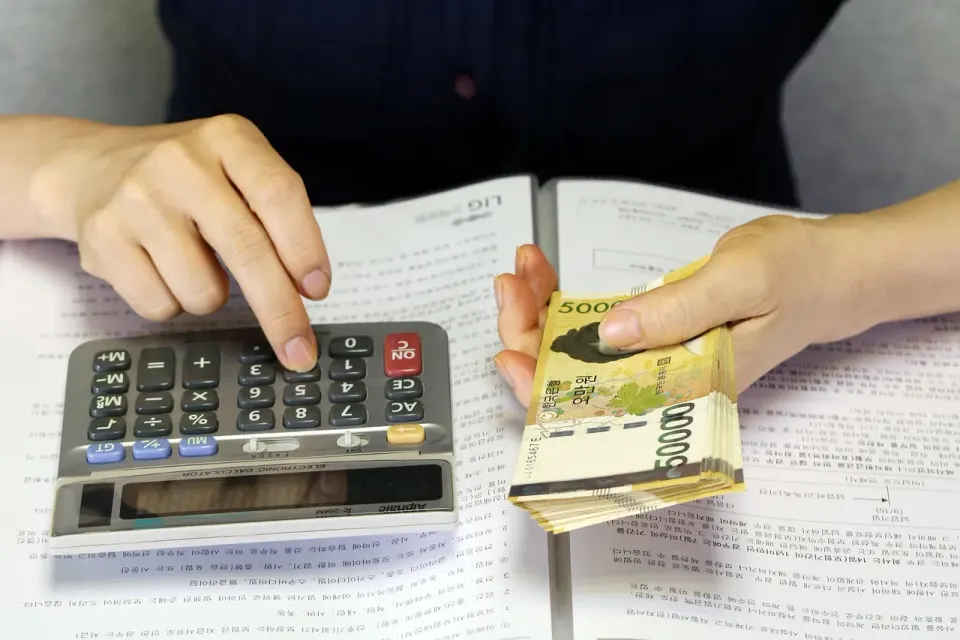
Now add rate assumptions. The Federal Reserve's H.15 release showed the 10-year Treasury yield at 5.13% on October 21, 2026. Assume a 6.3% rate on the CDC portion and 7% on the bank portion. Those are assumptions for the example, not quotes. The two loans together would cost roughly $89,000 a year in payments.
Add $30,000 a year for property taxes, insurance and maintenance, and the cost of owning comes to about $119,000. That is close to the $120,000 lease. The difference is what happens next. Part of each loan payment builds equity, and the rent will keep rising while a fixed-rate loan payment does not.
There is also a tax angle. The building itself, though not the land, is depreciated over 39 years under the rules in the IRS's Publication 946. Interior upgrades can often be written off much faster. Rent is fully deductible as it is paid. Your accountant should run both scenarios with your own numbers.
When leasing is still the better choice
Buying is a bet that your business will need roughly the same space, in the same place, for a long time. At New Club Cocoon, we think most owners overestimate how sure that bet is. A fast-growing team, an uncertain market or a lease with good renewal options all tilt the answer back toward renting.
These are the situations where leasing usually wins:
- You expect headcount or inventory to double or halve within five years.
- The $120,000-style down payment would drain your working capital.
- Your best location is in a district where owner-occupied buildings rarely sell.
- You value the option to relocate if footfall or the neighborhood changes.
Leasing also has costs that are easy to forget. The lease can put accessibility work, repairs and exit costs on the tenant. Our guide to who pays for ADA compliance in a commercial lease shows one clause that can quietly shift a large bill. Read those clauses before deciding that leasing is the cheap option.

Hidden costs on both sides
Owning brings costs that a lease often hides inside rent. A new roof or HVAC unit is now yours. So is the vacancy risk if you outgrow the building and need to find a tenant for the space you leave behind. Budget a reserve for capital repairs from day one.
Leasing has its own extras. A tenant usually pays to fit out the space and may have to strip it at the end. Our breakdown of how to deduct fit-out costs in 2026 shows how those build-out costs land on your tax return. A tenant also has less control over the building, from parking rules to who moves in next door.
Transaction costs matter too. Buying involves appraisal, environmental reports, legal fees and the SBA loan fees. Leasing can involve broker fees, though landlords usually pay them. Our explainer on tenant rep broker fees covers how that commission is built into a lease deal.
Timing the move from a lease to ownership
Buying a building rarely lines up neatly with the end of a lease. A purchase with an SBA 504 loan involves an appraisal, an environmental review, a bank approval and a CDC approval. Then the building may need its own fit-out before you can open. Plan for months, not weeks.
The safest approach is to start the search well before your lease expires. Twelve to eighteen months ahead is a sensible window for most small businesses. That gives you time to find the right building, close the loan and fit it out without paying for two spaces for long.
Your current lease shapes the timeline too. Check the notice period for ending or not renewing, and whether you can extend month to month. Some leases allow a short holdover at a higher rent, often 150% or more of the last rent. Knowing that number tells you what a delayed closing would really cost.
If the timing does not work, a short renewal can buy you room. A one- or two-year extension lets you buy on your own schedule rather than the lease's. Landlords may accept a shorter term in exchange for a higher rent, which is often still cheaper than a rushed purchase.
A decision checklist for owners
Before talking to a lender, work through a short list of questions. Each one is a reason to slow down if the honest answer is no.
- Will the business still fit this building in ten years?
- Can you put 10% or more down and still keep six months of operating cash?
- Would the building be easy to lease or sell if you had to move?
- Have you priced taxes, insurance and capital repairs, not just the loan payment?
- Has your accountant compared owning and leasing on an after-tax basis?
The practical answer on buying versus leasing
An SBA 504 loan makes owning your premises realistic for many small businesses. With about 10% down and a long fixed rate, the yearly cost of owning can come close to rent. Over a decade, the equity and the fixed payment can put the owner well ahead.
That only works if the business stays put. New Club Cocoon's advice is to start with the ten-year question, not the interest rate. If you can answer it with confidence, call a CDC and price the deal. If you cannot, negotiate a better lease and revisit the idea at the next renewal.
Reviewed by New Club Cocoon's leasing desk on October 23, 2026. This article is general information, not financial or tax advice.
How much can you borrow with an SBA 504 loan?
How much down payment does an SBA 504 loan need?
Is it cheaper to buy or lease commercial space?
Can I use an SBA 504 loan to buy an investment property?
Keep reading
All stories ↗ Tenant rep broker fees: who pays and how much The landlord usually writes the check, but the commission is built into your rent. Here is how it is calculated and what to put in writing. By Omar Saleh — 7 min
 ADA compliance in a commercial lease: who actually pays Landlord and tenant are both on the hook under federal law. The lease only decides who reimburses whom, so read that clause before the rent schedule. By Maya Ferrante — 8 min
 What a ten-year lease really costs The rate on the listing is the smallest number in the deal, and a decade of additional rent, fit-out and exit costs can roughly double it. By Maya Ferrante — 8 min
 Next in the index — 03 / 19 Fit-out — 7 min
How to deduct fit-out costs in 2026
The Monday memo · free
Subscribe for the Monday memo
One long read, three clauses worth knowing and a note on the market, every Monday morning.
( Tap to say yes )